 Zasder
Zasder
Zasder
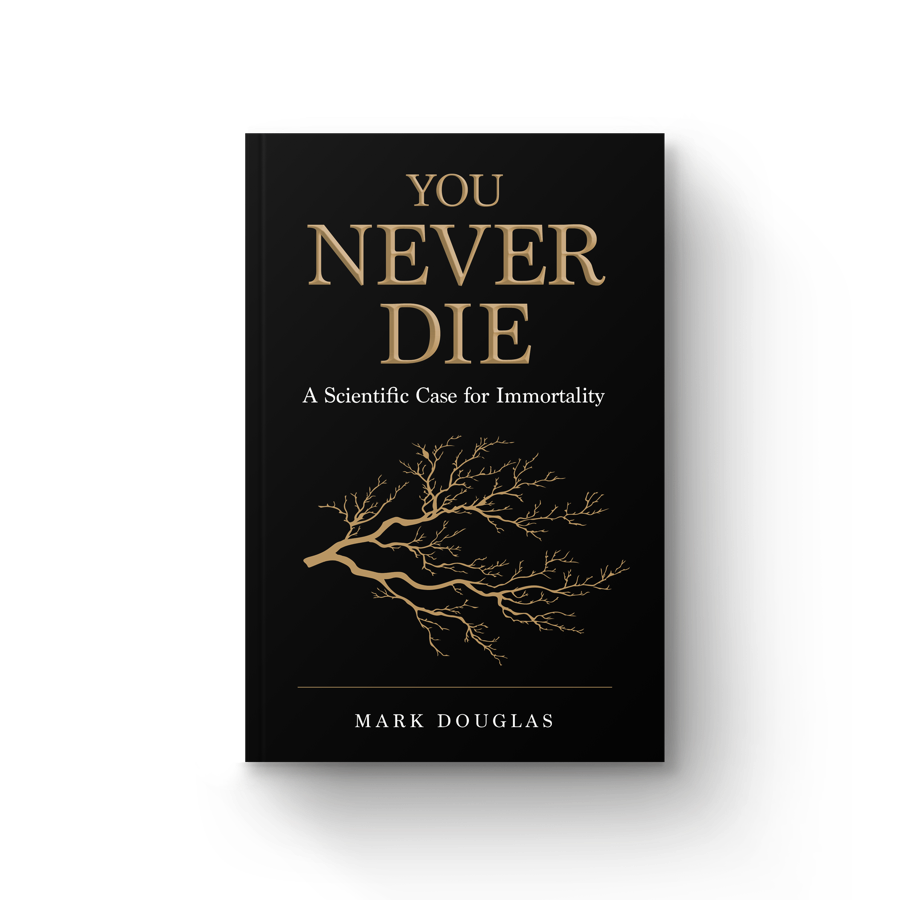
A Scientific Case for Immortality
What if the science we already accept proves you cannot permanently die?
Every atom in your body has already been replaced. You didn’t notice. You didn’t stop being you.
So what makes you you? It’s not the matter. The atoms in your brain right now aren’t the same ones that were there ten years ago. Neuroscience says your consciousness comes from how your brain is organized and how it functions, not from which specific carbon atoms happen to be sitting in your neurons on any given Tuesday.
Mark Douglas spent decades following that observation to its logical end. The conclusion is not what you’d expect.
In You Never Die, Douglas lays out a framework he calls Ixperiencit Theory. It’s built on three premises drawn from mainstream neuroscience and physics. No souls. No afterlife. No hand-waving. Just the structure and functioning of matter, and what happens when you take the science seriously instead of stopping where it gets uncomfortable.
The argument goes places that will bother you. Douglas doesn’t shy away from that. He takes on Derek Parfit’s causal continuity objection, engages with Chalmers and the hard problem, and is upfront about where established science ends and his interpretation begins. He also explores implications most people don’t want to think about, including some genuinely dark ones.
Rigorous engagement with the strongest objections. No appeals to the supernatural. Just the physics we already have.
A new framework for thinking about consciousness, identity, and death — grounded in how matter is organized, not what it’s made of.
The argument starts from premises most scientists already accept and follows them, step by step, to a conclusion neither religion nor materialism has dared to reach.
Engages with Derek Parfit on causal continuity, Chalmers on the hard problem, and the strongest counterarguments rather than dodging them.
Vivid, concrete scenarios that let you test the argument against your own intuitions about what it means to be a continuous self.
Upfront about where established science ends and interpretation begins. No supernatural escape hatches, no convenient ambiguity.
The argument goes places that will bother you. Douglas follows it wherever it leads — including the parts most people would rather not think about.
And they require nothing more than the physics we already have.
Get the Book on Amazon